East of Everest
  • Home
  • Scripture Commentary & Exposition
  • Essays & Articles
  • Select Quotations
  • Photography
  • Indexes
    • Category Index
    • Subject Index
    • Posts & Articles Arranged by Books of the Bible
    • Scripture References Index
    • Notes & Commentary Index
    • Glossary
  • About
    • A Brief Introduction
    • Contact
    • Privacy Policy
    • Cookie Policy
    • Terms of Use & Disclaimer
    • Subscribe
  • नेपाली
  • Home
  • Scripture Commentary & Exposition
  • Essays & Articles
  • Select Quotations
  • Photography
  • Indexes
    • Category Index
    • Subject Index
    • Posts & Articles Arranged by Books of the Bible
    • Scripture References Index
    • Notes & Commentary Index
    • Glossary
  • About
    • A Brief Introduction
    • Contact
    • Privacy Policy
    • Cookie Policy
    • Terms of Use & Disclaimer
    • Subscribe
  • नेपाली
Topics
Authority Belief & Unbelief Covenant Creation Mandate Creator & Creature Desire & Affections Doctrine of Scripture Ethics Exodus & New Exodus Fact & Meaning Faith Garden & Wilderness Gospel Ministry Hidden & Revealed Hinduism & Indian Philosophy Honor & Shame Hope Identity Image & Idolatry Incarnation Judgement Love Marriage & Family Missions New Creation Order Philosophy Politics & Government Power Preaching & Proclamation Priesthood Reading, Writing, & Interpretation Redemption Redemptive History Resurrection Sin Society & Culture Speech & Language Tabernacle & Temple The Church The Gospel The Image of God Virtue Work & Labor Worship
  • About
  • Privacy Policy
  • Cookie Policy
  • Terms
  • Contact
  • Subscribe
East of Everest
  • Home
  • Scripture Commentary & Exposition
  • Essays & Articles
  • Select Quotations
  • Photography
  • Indexes
    • Category Index
    • Subject Index
    • Posts & Articles Arranged by Books of the Bible
    • Scripture References Index
    • Notes & Commentary Index
    • Glossary
  • About
    • A Brief Introduction
    • Contact
    • Privacy Policy
    • Cookie Policy
    • Terms of Use & Disclaimer
    • Subscribe
  • नेपाली
  • Commentary & Exposition

The Character of a Prophet’s Speech as Divine Testimony

The unnamed prophet of Joshua 6 recalls the words of Joshua, revealing a need for Israel’s savior
  • rah
  • November 15, 2024
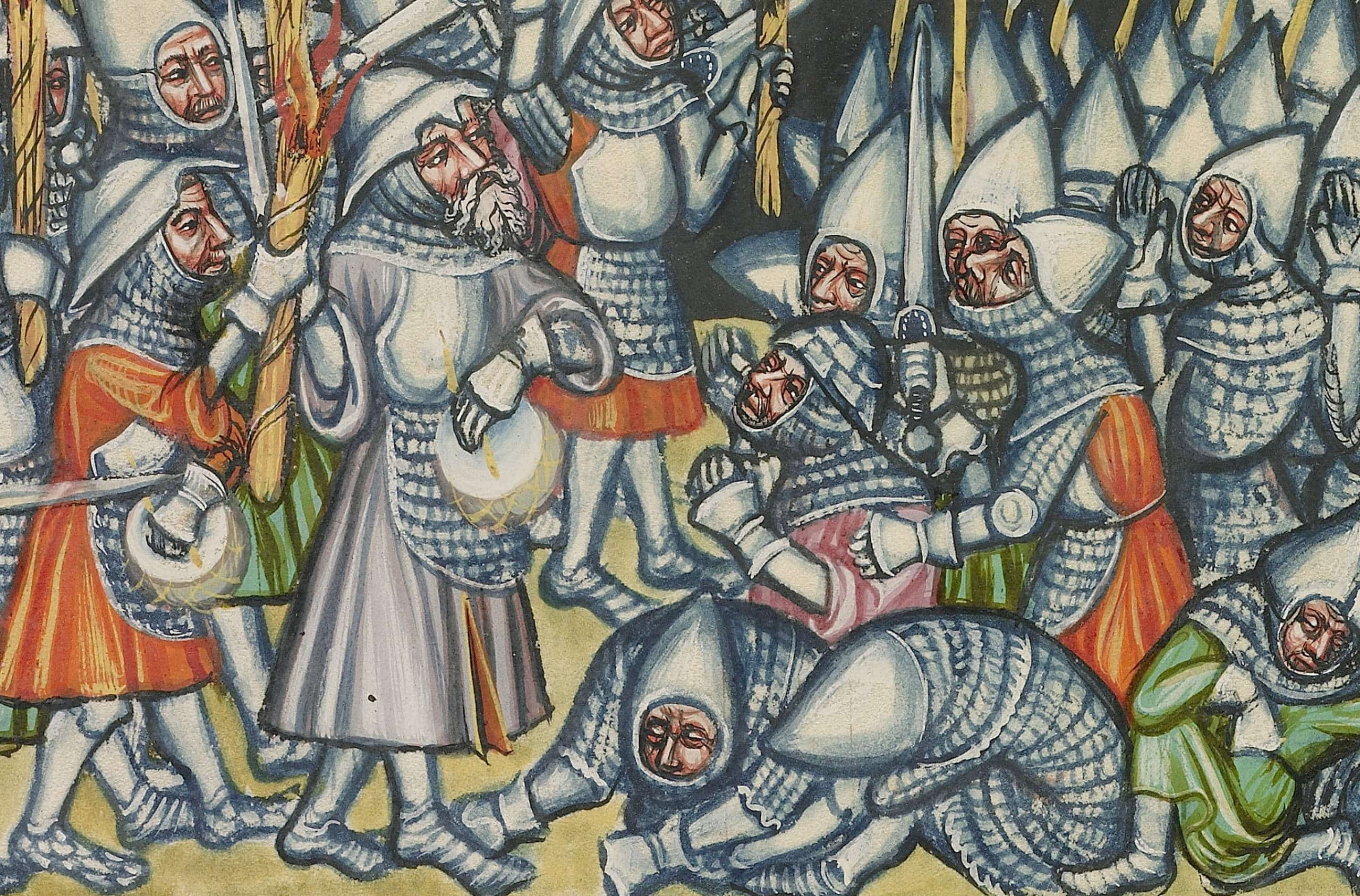
A detail of an illustrated leaf of “World Chronicle” (Weltchronik), composed in the middle 1200s by Rudolf von Ems, a knight and prolific writer. This picture depicts Gideon’s battle with the Midianites, as described in Judges 7. This edition dates between 1400-1410, depicting the Biblical narrative in a scene belonging to the Middle Ages. Ms. 33 (88.MP.70), fol. 132v, located at the Getty Museum in Los Angeles.

Judges, Judges 6:1-32

 Image credit:  Getty Museum

This brief post, considering the speech of the unnamed prophet in Judges 6, follows another introductory article, The Scripture’s Account of Gideon: Preliminary Considerations. It also anticipates another post that will examine Judges 6:1-32 more broadly.

Judges 6 recalls the appearance of a prophet in Israel during the days that the judges ruled in Israel. The prophet remains unnamed, but he takes up some of the same words spoken by Joshua, years earlier—words spoken just before Israel first entered Canaan as a nation. When the reader reviews the scene in which those words first appear in Joshua 24, he observes an obvious but important distinction in respect to the form of the text. He also notes the character of the text as revelation, which fact gives insight into the relation of its various parts.

The first half of Joshua 24 possesses two distinct sections in Joshua’s proclamation. Joshua 24:2-13 consist of Joshua’s direct speech on the behalf of God, and begins when Joshua says to the people, “Thus saith the LORD God of Israel” (Joshua 24:2). This section is then characterized by the sequence of first-person pronouns that appear in the chapter’s first 13 verses, each instance confirming that Joshua speaks for the LORD in a rather obvious manner. After this, Joshua adds his subsequent and connected exhortation and testimony, found in verses 14 and 15. The exhortation is distinguished from what precedes it: Joshua now speaks to his countrymen and references himself, concluding, “but as for me and my house, we will serve the LORD” (Joshua 24:15). As such, the use of the first-person pronoun in verses 2-13 highlights the direct speech of God by Joshua, while verses 14 and 15 consist of Joshua’s inspired exhortation and testimony to his countrymen, in which he summarizes their obligations and his own intention.

* * *

This distinction is significant, but more fully appreciated when we read how the unnamed prophet of Judges 6 later takes up Joshua’s words into his own mouth, in his own speech; for there, Joshua’s exhortation in Joshua 24:15 is but partially quoted, and a few words are also added in conclusion: “And I said unto you, I am the LORD your God; fear not the gods of the Amorites, in whose land ye dwell: but ye have not obeyed my voice [emphasis added].” In Judges 6, then, the first-person possessive pronoun is now appended to Joshua’s original exhortation. In considering them all together, one part of Joshua 24 includes words that nominally belongs to God, and the exhortation consists of words that most immediately belongs to Joshua; and yet, their later reconstruction by the prophet means that they appear in the record of scripture together as the word of the Spirit—the work of his inspiration.

* * *

The reordering of these parts together makes for a confirmed connection, which now belongs to the setting in Judges 6 and directs the reader’s inquiry and consideration. On the one hand, Joshua had exhorted Israel to fear the LORD, their redeemer: Israel was instructed to put aside the gods that their ancestors had worshiped in Mesopotamia, while also refusing the gods worshiped in the land that they were ready to enter—the land of the Amorites (cf. Joshua 24:14-15). Later, the unnamed prophet of Judges 6, recalling Israel’s disobedience in Canaan, condemns the people for not heading Joshua’s original counsel: “I am the LORD your God; fear not the gods of the Amorites” (Judges 6:10). In both cases, the word “fear” is used in connection with Israel’s disposition: Israel was to fear the LORD and not fear the gods of the Amorites. Israel is eventually condemned by the unnamed prophet of Joshua 6 because the Israelites have feared the gods of the land; and this, consequently, also means that the Israelites have not had a proper fear of their Lord. To the point, fear is made to name Israel’s dispositions in both obedience and disobedience. Fear—this feature of human expression—is made to describe both virtuous and sinful character, and hereby foreshadows the way that Judges 6 proceeds from its consideration of Gideon to the manner in which it predicts the person of Jesus Christ and, accordingly, highlights features of the New Covenant.

This will be followed by another post, soon.

Share
Tweet
Pin it
Share
Related Topics
  • Doctrine of Scripture
  • Preaching & Proclamation
  • Reading, Writing, & Interpretation
  • Redemptive History
  • Speech & Language
Previous Article
  • Commentary & Exposition

The Scripture’s Account of Gideon: Preliminary Considerations

  • rah
  • November 5, 2024
Read the Post
Next Article
  • Photography

Photography: January 1, 2025

  • rah
  • January 1, 2025
Read the Post
You May Also Like
Read the Post
  • Commentary & Exposition
  • Notes on Scripture
    • 2 Peter
    • 2 Peter 1:1-11

The Character of Virtue

The first part of a brief consideration of virtue in scripture
  • rah
  • January 17, 2025
Read the Post
  • Commentary & Exposition
    • Judges
    • Judges 6:1-32

The Scripture’s Account of Gideon: Preliminary Considerations

The narrative of scripture as a bulwark against moralism
  • rah
  • November 5, 2024
Read the Post
  • Commentary & Exposition
    • Colossians
    • Colossians 1:1-29

The Time & Space Between Faith & Love

Acknowledging the rule & power of God in the church by its expressions of love
  • rah
  • August 28, 2024
Read the Post
  • Commentary & Exposition
    • Colossians
    • Colossians 1:1-29

Awareness & our Earliest and Natural Obligations of Love

The obligations in family predict their display in the church
  • rah
  • August 15, 2024
Read the Post
  • Notes on Scripture

Redemption: The Purchase of a Postscript

Noting the persistence of God’s will in the nature of redemption
  • rah
  • April 12, 2024
Read the Post
  • Commentary & Exposition
    • Exodus
    • Exodus 1:1-14

Redemption: Renegotiating the Value of Creation

What Israel’s Exodus tells us about redemption
  • rah
  • March 22, 2024
Read the Post
  • Commentary & Exposition
    • Exodus
    • Exodus 1:1-14

How Christ’s Toil Made Light Work

The condition of Israel's affliction & redemption from Egypt
  • rah
  • June 30, 2023
Read the Post
  • Commentary & Exposition
    • Acts of the Apostles
    • Acts 2:1-13

Reading the Old Testament by the New (& the New by the Old)

The Christian reads as did the prophets, by the Spirt and in search of Jesus Christ
  • rah
  • March 3, 2023
East of Everest
  • About
  • Privacy Policy
  • Cookie Policy
  • Terms
  • Contact
  • Subscribe

An irregular record of occasional thoughts on scripture, religion, and culture

Copyright © 2025. All rights reserved.

Input your search keywords and press Enter.